- Event Death of Mughal Emperor Aurangzeb
- Date 3 March 1707, Ahmednagar, Deccan
- Cause Natural death — old age and declining health, aged 88
- Reign 1658–1707 — nearly 49 years, the longest of any Mughal emperor
- Empire at Death ~3.2 million km² — the greatest territorial extent in Mughal history
- Burial Khuldabad, Maharashtra — open-air grave, by his own instruction, no mausoleum
- Succession War among three sons — Prince Muazzam prevailed as Bahadur Shah I
- Historical Significance Symbolic beginning of the Mughal Empire's long decline
The Last Emperor of a Great Mughal Age
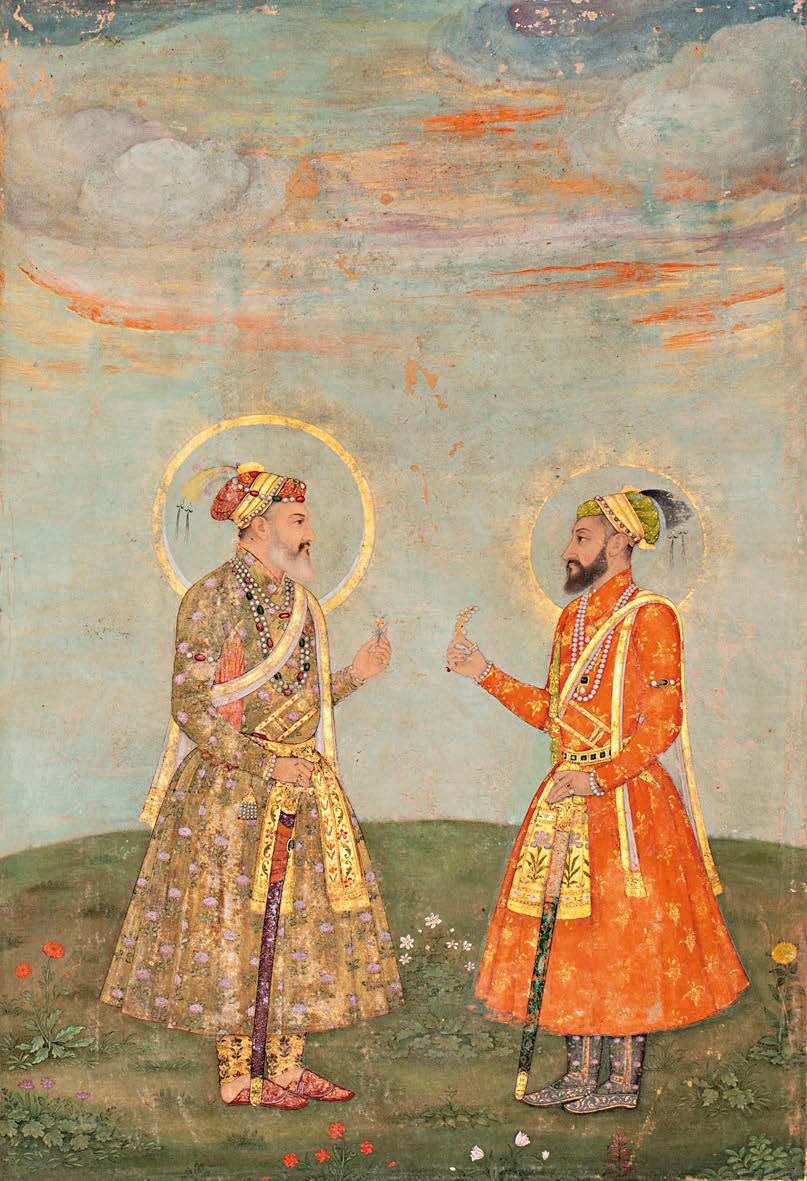
To understand what ended on 3 March 1707, you have to understand the man who died that day — and what he had built, broken, and left behind. Abu Muzaffar Muhi-ud-Din Muhammad Aurangzeb, the sixth Mughal emperor, was one of the most formidable and controversial rulers in all of Indian history. He was the last emperor under whom the Mughal Empire functioned as a genuinely supreme power — and, in a bitter irony, the man whose choices made its collapse inevitable.
Born on 3 November 1618, Aurangzeb was the third son of Emperor Shah Jahan — the emperor who built the Taj Mahal. He grew up in the shadow of the grand Mughal court, trained in warfare, administration, and Islamic theology. Unlike his elder brothers, he was not given to luxury or poetry. He was ascetic, disciplined, and utterly ruthless when he believed it necessary.
In 1658, when Shah Jahan fell gravely ill, a war of succession broke out among his four sons. Aurangzeb emerged victorious — defeating and killing two of his brothers, imprisoning his father Shah Jahan in the Agra Fort for the remaining eight years of the old emperor's life — and claiming the throne at the age of 39. He would hold it for nearly 49 years.
Under Aurangzeb the empire reached its greatest territorial size, absorbing the Deccan Sultanates of Bijapur (1686) and Golconda (1687), and pushing south into territories no previous Mughal emperor had controlled. But Aurangzeb was also a man of deep religious conviction — and his increasingly strict enforcement of orthodox Islamic practice, including the reimposition of the jizya tax on non-Muslims and the destruction of some Hindu temples, generated resistance on a scale the empire had never previously faced.
The Deccan Trap — 26 Years That Broke the Empire
The defining — and ultimately fatal — decision of Aurangzeb's reign was his personal departure for the Deccan in 1681, at the age of 63. He intended to crush the Maratha resistance that had intensified following the death of Shivaji in 1680. What followed was not a campaign. It was a slow catastrophe.
Aurangzeb never came back. From 1681 until his death in 1707 — a span of 26 years — the emperor who ruled the greatest empire on earth governed from a succession of military camps and tents across the Deccan plateau, never returning permanently to Delhi, never sleeping in the Red Fort that was his imperial seat.
The early objectives were achieved. The Deccan Sultanates fell. Sambhaji — Shivaji's son and heir — was captured and executed in 1689 in what Aurangzeb believed would end Maratha resistance permanently. It did not. Leadership passed to Rajaram, then to Tarabai, and the Maratha confederacy did not break — it adapted. Guerrilla warfare replaced pitched battles. Maratha cavalry raided imperial supply lines across hundreds of kilometres. Fort after fort was taken, lost, retaken, and lost again.
The financial and human cost was catastrophic. The jagir system — the land-revenue grants that sustained Mughal officers' loyalty — began to break down as the treasury strained under the weight of perpetual war. Provincial governors grew increasingly autonomous, handling revenue locally rather than remitting it to the centre. The administrative coherence that had been the Mughal empire's greatest strength — refined by Akbar, maintained by Jahangir and Shah Jahan — began to fragment.
By the early 1700s, Aurangzeb was in his late eighties. He was physically weakened, increasingly isolated, aware — from the evidence of his own letters, which survive — that the Deccan enterprise had not delivered what he had promised himself and his empire. His correspondence from these years is shot through with a melancholy rarely seen in the public record of a Mughal emperor: "I came alone, and I go as a stranger. I know not who I am, or what I have been doing."
Death — A Simple End to an Enormous Reign
Aurangzeb died on the morning of 3 March 1707 at a military camp near Bhingar, close to Ahmednagar in the Deccan. He was 88 years old. He had been ill for several weeks. His death, when it came, was quiet — a stark contrast to the scale and turbulence of the reign it ended.
Several members of the imperial court were present, including Prince Azam Shah, who had remained with his father in the Deccan. The eldest son, Prince Muazzam, was stationed in the north. Word was dispatched immediately — and with it, the signal that a succession war had begun.
Aurangzeb's burial instructions were extraordinary in their deliberate humility. He had written them out in advance, with characteristic precision:
- No grand mausoleum — he forbade the construction of any monument over his grave
- Simple open-air burial — his grave was to be exposed to the sky, like a common man's
- Self-funded — burial expenses to be paid only from money he had personally earned by copying the Quran and stitching prayer caps; no imperial treasury funds
- Location — beside the shrine of the Sufi saint Syed Zainuddin Shirazi at Khuldabad, a town he held sacred
The Succession War — The Empire Tears Itself Apart
Aurangzeb had lived through — and won — one Mughal succession war. He had watched two of his brothers die in it. He knew exactly what would follow his own death. He had tried to manage it through his will and through careful positioning of his sons. It made no difference.
Three sons moved simultaneously to claim the throne:
- Prince Azam Shah — present in the Deccan, declared himself emperor in March 1707 and began marching north
- Prince Muazzam — stationed in Kabul, declared his claim and marched south with the largest and best-organised army
- Prince Kam Bakhsh — Aurangzeb's youngest and most impetuous son, declared himself ruler in the Deccan and attempted to establish independent control of Bijapur and Hyderabad
The decisive confrontation came at the Battle of Jajau on 20 June 1707, near Agra. Muazzam's forces comprehensively defeated Azam Shah, who was killed in battle. Muazzam ascended the throne as Bahadur Shah I. Kam Bakhsh held out in the south until January 1709, when he too was defeated near Hyderabad and fatally wounded.
Bahadur Shah I took the throne — but the empire he inherited was not the empire his father had commanded. The treasury was depleted. Provincial governors had grown accustomed to autonomy. The Marathas — far from crushed — were resurgent. And the moral authority of a supreme Mughal centre had been shaken by 26 years of inconclusive war and now a brutal succession conflict.
The Empire After 1707 — A Slow Unravelling
The Mughal Empire did not collapse in 1707. It continued, formally, for another 150 years — the last emperor, Bahadur Shah Zafar, was only deposed and exiled by the British following the Uprising of 1857. But 1707 was the year the empire's capacity for recovery was spent.
What followed was a succession of weaker emperors — twelve in fifty years, most of whom were made and unmade by powerful nobles — and a steady fragmentation of real power away from the centre:
- The Marathas transformed from a regional guerrilla force into the dominant power of central and western India, eventually extending their authority from Pune to Delhi itself
- Regional dynasties — the Nawabs of Bengal, Awadh, and Hyderabad — effectively became independent states while maintaining the nominal form of Mughal allegiance
- Foreign invasions followed: Nadir Shah of Persia sacked Delhi in 1739 and carried off the Peacock Throne; Ahmad Shah Durrani raided repeatedly through the 1750s and 1760s
- European trading companies — particularly the British East India Company — expanded their territorial ambitions into the power vacuum that Mughal fragmentation created
Why 3 March 1707 Still Matters
The death of Aurangzeb is not merely a historical event. It is a turning point that shaped the entire trajectory of the Indian subcontinent for the next three centuries — and whose consequences led, through a chain of causation that historians continue to trace, to the British colonial period, the independence movement, and the modern nations of India, Pakistan, and Bangladesh.
It matters as a study in imperial overreach — the lesson that territorial expansion without administrative sustainability is not strength but the accumulation of a debt that eventually comes due with catastrophic interest.
It matters as the biography of a man who was, in his own terms, genuinely devout, disciplined, and convinced of the righteousness of his cause — and who left behind an empire broken by the very qualities that made him formidable.
And it matters as the beginning of a question that defined India for the next two centuries: in the absence of a supreme Mughal centre, who rules India? The Marathas tried to answer it. The British eventually imposed their answer. In 1947, India answered it for itself.
Frequently Asked Questions
When did Emperor Aurangzeb die?
Aurangzeb died on 3 March 1707 near Ahmednagar in the Deccan region of present-day Maharashtra, India. He was residing in a military camp at Bhingar, close to Ahmednagar, where he had been directing his prolonged Deccan military campaigns.
Where did Aurangzeb die?
Aurangzeb died at a military camp near Ahmednagar in the Deccan, present-day Maharashtra. Remarkably, he had not returned permanently to Delhi for 26 years — since 1681 — choosing instead to personally direct his Deccan campaigns from the field. He died far from the imperial capital he had once ruled from the Red Fort.
What was the cause of Aurangzeb's death?
Aurangzeb died of natural causes due to old age and declining health. Historical accounts indicate he had been ill for several weeks before his death. He was 88 years old, had spent over two decades in arduous military camps in the Deccan, and his physical condition had deteriorated significantly in his final years.
How old was Aurangzeb when he died?
Aurangzeb was 88 years old at the time of his death on 3 March 1707. Born on 3 November 1618, he was one of the longest-lived and longest-reigning Mughal emperors, holding power for nearly 49 years from 1658 to 1707.
How long did Aurangzeb rule the Mughal Empire?
Aurangzeb ruled for nearly 49 years, from 1658 until his death in 1707, making him the longest-reigning Mughal emperor. He came to power after a brutal war of succession against his brothers following the incapacitation of his father, Shah Jahan.
Who became emperor after Aurangzeb?
Prince Muazzam, Aurangzeb's eldest surviving son, became emperor as Bahadur Shah I after defeating his brother Azam Shah at the Battle of Jajau on 20 June 1707. A third brother, Kam Bakhsh, also contested the throne but was defeated and fatally wounded in January 1709 near Hyderabad.
How many sons fought for the Mughal throne after Aurangzeb's death?
Three of Aurangzeb's sons — Prince Muazzam, Prince Azam Shah, and Prince Kam Bakhsh — all claimed the throne after his death. The resulting war of succession mirrored the very conflict through which Aurangzeb himself had come to power half a century earlier, defeating and killing his own brothers.
Where is Aurangzeb buried?
Aurangzeb is buried at Khuldabad, a town about 25–30 km from Ahmednagar in Maharashtra, beside the shrine of the Sufi saint Syed Zainuddin Shirazi, whom he deeply admired. In accordance with his explicit written instructions, his tomb is strikingly simple — an open-air grave, originally a plain earthen mound, later enclosed with a modest marble railing.
Why is Aurangzeb's tomb simple compared to other Mughal emperors?
Aurangzeb explicitly instructed that his burial should be simple, funded only from money he had personally earned by copying the Quran and stitching prayer caps — not from the imperial treasury. He forbade the construction of a grand mausoleum. This decision reflected both his personal religious austerity and his philosophical rejection of the monumental tomb-building tradition of emperors like his great-grandfather Shah Jahan.
Did Aurangzeb's death mark the decline of the Mughal Empire?
Yes — historians widely regard 1707 as the symbolic turning point of the Mughal Empire's decline. While the empire continued formally for another 150 years until 1857, it never recovered the centralised authority, financial stability, or political dominance it had held in earlier centuries. The immediate succession war, combined with the overextension of Aurangzeb's Deccan campaigns, broke the structural coherence of the empire beyond repair.