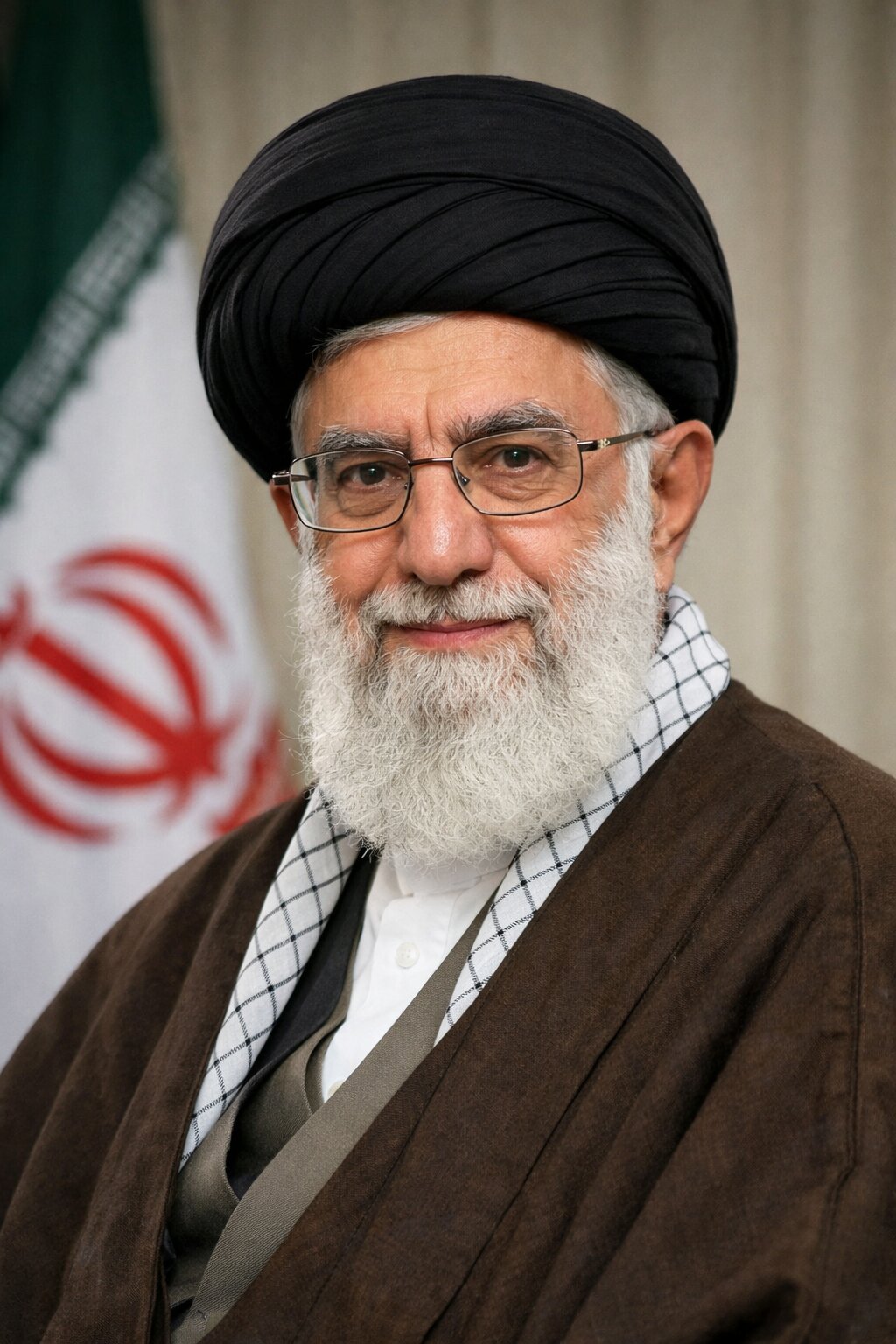
- Event Assassination of Ali Khamenei, Supreme Leader of Iran
- Date 28 February 2026, early morning hours
- Confirmed 1 March 2026, ~5:00 am IST, Iranian State TV
- Location Khamenei's compound, Tehran, Iran
- Carried Out By Israel (airstrike), with CIA intelligence support from the United States
- Victim Ayatollah Ali Hosseini Khamenei, Supreme Leader of Iran (1989–2026)
- Age 86 Years
- Iran's Response Retaliatory strikes on 27 US military bases and Israeli positions
- Constitutional Succession Three-member interim council under Article 111 of Iran's constitution
- Mourning Period 40 days, declared by the Iranian government
Who Was Ali Khamenei?
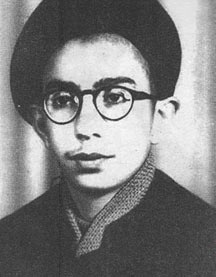
To understand the full weight of 28 February 2026, you must first understand the man who was killed that morning — and what he represented. Ayatollah Ali Hosseini Khamenei was not simply a head of state. He was the ideological architect of the Islamic Republic's second chapter — the man who took a revolution built by one visionary and kept it alive for nearly four more decades through sheer political will, theological authority, and strategic cunning.
Born on 19 April 1939 in the holy city of Mashhad in northeastern Iran, Khamenei grew up in a deeply religious household. His father was a cleric, and from childhood he was immersed in Islamic scholarship. As a young man he became a close disciple of Ayatollah Khomeini, participating in the revolutionary movement against the Shah long before it succeeded. He was imprisoned and tortured by SAVAK — the Shah's feared secret police — on multiple occasions, a crucible that hardened both his ideological conviction and his lifelong hostility toward Western-backed power structures.
After the 1979 Islamic Revolution, Khamenei rose rapidly through the new republic's institutions. He served as President of Iran from 1981 to 1989 — a period dominated by the catastrophic Iran-Iraq War, during which an estimated 500,000 Iranians perished. When Ayatollah Khomeini died in June 1989, the succession was anything but certain. Khamenei was not a Grand Ayatollah — he lacked the highest clerical rank that tradition demanded of a Supreme Leader. But he was politically trusted by the revolutionary establishment, and in a decision that quietly shocked many senior clerics, he was elevated to the Supreme Leadership by a majority of the Assembly of Experts.
What followed was a masterclass in political survival. Khamenei outmanoeuvred reformists, hardliners, and pragmatist presidents alike — from Rafsanjani to Khatami, Ahmadinejad to Rouhani — always positioning himself as the final, unchallengeable authority. He built and sustained the "Axis of Resistance" — a deliberate regional architecture of allied armed groups: Hezbollah in Lebanon, Hamas in Gaza, the Houthis in Yemen, and Shia militias across Iraq and Syria. Under his direction, Iran's nuclear programme advanced from a rudimentary research operation to a threshold capability that alarmed the world. He suppressed successive waves of domestic protest — in 2009, 2019, and 2022 — each time emerging more entrenched rather than weakened. By February 2026, he was 86 years old and reportedly in declining health — but he remained, publicly and institutionally, the supreme authority of a nation of 90 million and the ideological anchor of a regional network stretching from the Mediterranean to the Arabian Sea.
The Road to February 2026 — A Region on the Brink
The assassination did not happen in a vacuum. The months preceding it had been among the most volatile the Middle East had witnessed since the 2003 Iraq War, and understanding the chain of escalation is essential to understanding why 28 February happened at all.
Throughout 2025, a series of Israeli military campaigns — collectively referred to as the Twelve-Day War — struck deep into Iran's military infrastructure with a precision that stunned regional analysts. Iranian air defence systems, ballistic missile storage facilities, and IRGC command centres across multiple provinces were systematically degraded. Several senior IRGC commanders were eliminated in targeted strikes. Hezbollah, already severely weakened in prior Israeli operations, had lost much of its rocket arsenal and significant command capacity — robbing Tehran of its most powerful deterrent lever against Israel.
Inside Iran, conditions were equally precarious. Economic collapse driven by decades of compounding sanctions had pushed millions into poverty. The Iranian rial had lost over 90% of its value against the dollar in a decade. Youth unemployment exceeded 25%. The 2022 Woman, Life, Freedom uprising had shaken the regime more profoundly than any previous protest wave — and while brutally suppressed, the underlying social fractures never healed.
Tensions between Tehran, Washington, and Tel Aviv had moved far beyond the familiar cycle of threats and posturing. Back-channel diplomatic efforts, including quiet nuclear talks, had collapsed entirely. The region was, as one senior Western intelligence official later described it, "a landscape in which every actor had convinced themselves the other side would blink first — and nobody did."
That reckoning arrived at dawn on a Saturday.
The Strike — What Happened on 28 February 2026
In the early morning hours of Saturday, 28 February 2026, a coordinated joint US-Israeli military operation was launched against Iran — the most consequential single day of military action in the Middle East since the 2003 invasion of Iraq.
The operation unfolded across three simultaneous layers. Israeli airstrikes hit military and command infrastructure across 24 Iranian provinces simultaneously — a scale of concurrent targeting designed to overwhelm Iran's ability to triage its response. In parallel, US Cyber Command launched a digital offensive that severed Iranian military communications networks, radar systems, and command-and-control infrastructure, effectively blinding Tehran at the worst possible moment. And at the centre of it all: a precise strike on a single compound in the capital.
The CIA had confirmed Khamenei's presence at his Tehran compound, where he was attending a gathering of key senior decision-makers. The original plan had been a night strike, but updated intelligence moved the window to dawn. At first light, the compound was hit. The strike was immediate and devastating. Khamenei did not survive. His wife, Mansoureh Khojasteh Bagherzadeh, survived the initial strike but died from her injuries two days later on 2 March.
28 Feb, dawn — Strike executed. Iranian state media immediately denies Khamenei's death, claims he is safe.
28 Feb, afternoon — Trump announces assassination on Truth Social. Netanyahu cites growing signs of death.
28 Feb, ~11:55 pm — Unnamed Israeli official confirms body recovered and identified.
1 March, ~5:00 am IST — Iranian state TV officially confirms Khamenei's death.
Iran's Constitutional Crisis and Military Response
Within hours of confirmation, Iran entered a constitutional and political crisis without modern parallel. The Islamic Republic had never faced the sudden violent death of a Supreme Leader — let alone in the middle of active military conflict.
Article 111 of Iran's constitution was immediately invoked, mandating the formation of a temporary leadership council pending selection of a permanent Supreme Leader by the Assembly of Experts. The three-member council:
- President Masoud Pezeshkian — elected head of government
- Chief Justice Gholamhossein Mohseni-Ejei — head of Iran's judiciary
- Senior Cleric Ayatollah Alireza Arafi — representative of the clerical establishment
President Pezeshkian condemned the killing as a "great crime against humanity and international law", vowing Iran would not be broken. The IRGC — Iran's most powerful military and political institution — pledged "hard, decisive, and regret-inducing" retribution, and within 48 hours, delivered it.
Iran's military response targeted 27 US military bases across eight countries — Qatar, UAE, Kuwait, Bahrain, Jordan, Saudi Arabia, Iraq, and Oman — alongside Israeli military installations. Iran declared the operation the largest in its armed forces history. Multiple countries closed their airspace. Shipping through the Strait of Hormuz was disrupted, sending global oil prices surging to record highs. A national 40-day mourning period was declared.
How the World Reacted
Few events in recent history produced such a swift, sweeping, and polarised global response. The dividing lines were immediate and revealing.
Russia President Vladimir Putin described the killing as a "cynical murder" violating "all norms of international law and basic human morality", conveying formal condolences and calling for an emergency UN Security Council session.
China Beijing's Foreign Ministry issued one of its strongest-ever condemnations of a US-allied military action — a "grave violation of Iran's sovereignty and flagrant trampling of the UN Charter" — and offered to mediate in subsequent negotiations.
United Nations Secretary-General António Guterres warned in direct terms that the world was "one miscalculation away from a regional war with global consequences", calling urgently for de-escalation. An emergency Security Council session ended in deadlock, with the US vetoing a condemnation resolution.
Arab World Gulf states publicly called for restraint while diplomatic sources reported quiet private relief. Turkey condemned the strike. Mass protests erupted in Pakistan, with smaller demonstrations across South Korea, Spain, Turkey, and the United Kingdom.
The Succession — Who Leads Iran Now?
The most consequential question left by the assassination is not what happened — but what comes next for a system built entirely around the concept of a single supreme clerical authority.
The Assembly of Experts — 88 senior clerics with constitutional authority to select the next Supreme Leader — faces an unprecedented challenge: choosing a successor in the middle of active military conflict, with partial communications disruption, governing a fractured population whose loyalty to the system is deeply uncertain.
Names in discussion:
- Mojtaba Khamenei — Ali Khamenei's son, long rumoured as a preferred successor, but his elevation would be theologically controversial and politically explosive
- Ayatollah Ahmad Jannati — elderly hardliner and head of the Guardian Council, ideologically aligned with the old guard
- An IRGC-backed figure — the scenario most alarming to Western analysts: a Supreme Leader selected primarily to reflect the Revolutionary Guard's institutional interests, effectively militarising the role entirely
Why 28 February 2026 Will Be Remembered
History does not always announce its turning points. Some of the most consequential moments arrive without warning — a gunshot in Sarajevo, a wall falling in Berlin, towers collapsing in New York. 28 February 2026 belongs in that company: a morning that did not merely make headlines, but rewrote the fundamental architecture of a region.
Four fault lines will define what follows:
- Nuclear Risk: Khamenei was the ultimate gatekeeper of Iran's weaponization decision. Without him, the IRGC may accelerate development. Non-proliferation experts have described the current moment as the most dangerous since the Cuban Missile Crisis.
- Axis of Resistance: Hezbollah, Hamas, and the Houthis drew ideological legitimacy and strategic coherence from Tehran. Without Khamenei as anchor, the network risks fragmenting — some elements radicalising further, others potentially open to accommodation.
- Global Energy: Iran controls the Strait of Hormuz, through which roughly 20% of global oil supply passes daily. The structural risk premium injected into energy markets by this crisis may persist for years.
- International Law: The deliberate killing of a recognised head of state by a foreign government — however authoritarian — has no clear modern legal precedent. The questions it raises about sovereignty, the laws of war, and the limits of targeted killing will be debated for decades.
Frequently Asked Questions
When was Ali Khamenei assassinated?
Ali Khamenei was assassinated on 28 February 2026 in the early morning hours, during a coordinated joint US-Israeli military operation targeting Tehran. His death was officially confirmed by Iranian state TV at approximately 5:00 am Iran Standard Time on 1 March 2026.
How was Ali Khamenei killed?
Khamenei was killed in an Israeli airstrike on his compound in Tehran. The CIA had obtained precise intelligence pinpointing his location during a gathering of senior Iranian decision-makers. US Cyber Command simultaneously disrupted Iranian military communications to prevent a coordinated response.
Who confirmed Khamenei's death?
Iranian state TV officially confirmed his death on 1 March 2026. Before that, US President Donald Trump declared the assassination publicly on Truth Social, and Israeli PM Benjamin Netanyahu cited growing signs of his death. An unnamed Israeli official confirmed his body had been identified just before midnight on 28 February.
What happened to Iran after Khamenei's death?
Iran immediately activated Article 111 of its constitution, forming a three-member interim leadership council comprising President Masoud Pezeshkian, Chief Justice Gholamhossein Mohseni-Ejei, and senior cleric Ayatollah Alireza Arafi. A 40-day national mourning period was declared. The Assembly of Experts began the process of selecting a permanent successor.
Did Iran retaliate after Khamenei's assassination?
Yes. The IRGC launched retaliatory strikes against 27 US military bases across the Middle East — targeting assets in Qatar, UAE, Kuwait, Bahrain, Jordan, Saudi Arabia, Iraq, and Oman — as well as Israeli military positions. Iran described it as the most devastating offensive in its armed forces history.
How did the world react to Khamenei's killing?
Reactions were sharply divided. Russia called it a cynical murder violating international law. China condemned it as a grave violation of Iran's sovereignty. The UN Secretary-General urged an immediate return to negotiations. Several countries closed their airspace. Protests erupted in Pakistan, Turkey, Spain, South Korea, and the UK.
How long was Ali Khamenei Iran's Supreme Leader?
Ali Khamenei served as Supreme Leader for 37 years — from June 1989 following Ayatollah Khomeini's death until his assassination in February 2026. He was 86 years old at the time of his death, making him one of the longest-serving authoritarian leaders in modern history.
What happens to Iran's nuclear programme after Khamenei?
This remains the most consequential open question. Khamenei was the ultimate gatekeeper of Iran's nuclear decision-making. Analysts warn that the IRGC — which operates much of the nuclear infrastructure — may now push for faster weaponization without the moderating influence of political calculations a Supreme Leader must weigh.